


 Cart
Cart
 sales@molnova.com



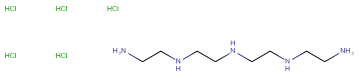
Tetraethylenepentamine Pentahydrochloride
CAS No. 4961-41-5
Tetraethylenepentamine Pentahydrochloride( —— )
Catalog No. M14659 CAS No. 4961-41-5
Used in synthetic resin, also used as additive, curing agent, promoter, etc.
Purity : >98% (HPLC)
 COA
Datasheet
HNMR
HPLC
MSDS
Handing Instructions
COA
Datasheet
HNMR
HPLC
MSDS
Handing Instructions
| Size | Price / USD | Stock | Quantity |
| 25MG | 45 | In Stock |


|
| 100MG | 59 | In Stock |
|
| 200MG | 106 | In Stock |
|
| 500MG | 146 | In Stock |
|
| 1G | Get Quote | In Stock |
|
Biological Information
-
Product NameTetraethylenepentamine Pentahydrochloride
-
NoteResearch use only, not for human use.
-
Brief DescriptionUsed in synthetic resin, also used as additive, curing agent, promoter, etc.
-
DescriptionUsed in synthetic resin, also used as additive, curing agent, promoter, etc.
-
In Vitro——
-
In Vivo——
-
Synonyms——
-
PathwayOthers
-
TargetOther Targets
-
Recptoriron
-
Research Area——
-
Indication——
Chemical Information
-
CAS Number4961-41-5
-
Formula Weight371.61
-
Molecular FormulaC8H23N5·5HCl
-
Purity>98% (HPLC)
-
SolubilitySoluble in DMSO
-
SMILESCl.Cl.Cl.Cl.Cl.NCCNCCNCCNCCN
-
Chemical Name——
Shipping & Storage Information
-
Storage(-20℃)
-
ShippingWith Ice Pack
-
Stability≥ 2 years
Reference
1.Wilfong WC, et al. ACS Appl Mater Interfaces. 2014 Aug 27;6(16):13617-26.
molnova catalog



related products
-
Substance P (6-11)/H...
Substance P (6-11) is the C-terminal hexapeptideamide of Substance P (Substance P ).Substance P (6-11) binds to NK-1 tachykinin receptor. Substance P (6-11) shows depolarization of motoneurons and a hypotensive effect.
-
Citronellyl Propiona...
Citronellyl propionate is a RIFM fragrance from the bark of citrus trees. It is a potential insect repellent and has a strong repellent effect on castor caterpillars.
-
N-Acetyl-L-tyrosine
Acetyltyrosine is a side chain reaction of tyrosine. It converts to tyrosine and then can be used in neurotransmitter treatment as a precursor of cathecholamine.
